Enterprise Architecture & Technology Stacks

Production-Grade Engineering Stacks & AI

At Sibiri Innovation, we build software engineered for high concurrency, zero technical debt, and mathematical reliability. Explore the verified technology stacks our senior practitioners use in active production — from MERN, MEAN, Next.js, and Enterprise Laravel 11 to Java Spring Boot, Python Django, MariaDB Galera clusters, and autonomous Agentic AI with LangGraph & RAG.

sibiri-stack-matrix.yaml

engine: "Sibiri Innovation Core Architecture"

tier_1_fullstack: [MERN, MEAN, Next.js 15, React 19]

tier_2_backend: [Laravel 11, PHP 8.3 JIT, Django 5, FastAPI]

tier_3_enterprise: [Java 21 Spring Boot, NestJS, Kafka]

tier_4_ai_agents: [Agentic AI, RAG, LangChain, LangGraph, LLM]

tier_5_storage_cms: [MariaDB Galera, Qdrant, Wikis, WordPress]

tier_6_cloud: [Kubernetes, Docker, Terraform, AWS]

100% In-House Zero Tech Debt 99.99% Cloud SLA
15+
Production Stacks & Frameworks
99.99%
Cloud Architecture SLA Standard
100%
In-House Senior Engineers
0%
Technical Debt Tolerance
Core Engineering Domains

Core Engineering Domains & Stack Hierarchy

Explore how we structure our technological competencies into distinct domain tiers for enterprise clients worldwide.

02

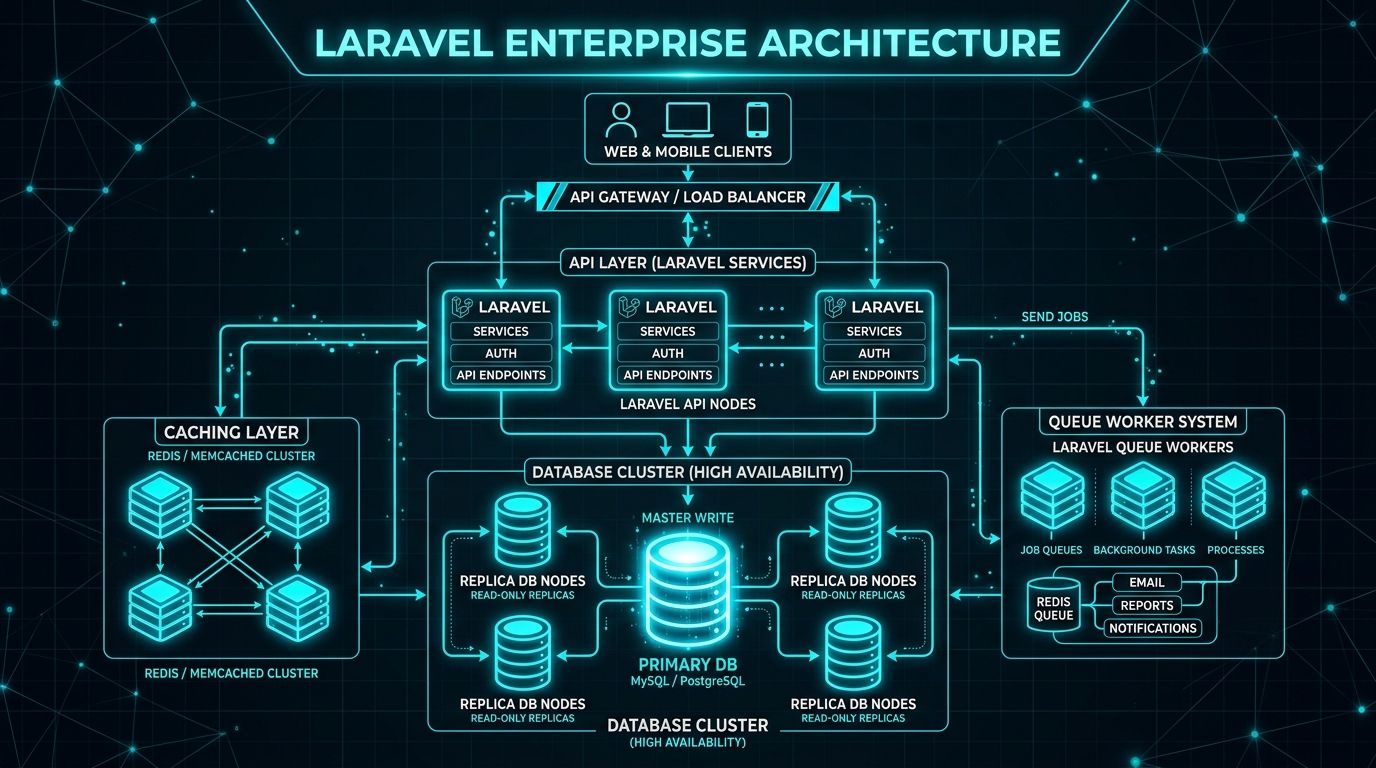
Enterprise Backend & SaaS (Laravel 11 & Core PHP)

High-concurrency business platforms, multi-tenant ERPs, and financial ledgers powered by Laravel Octane, JIT compilation, and native WebSockets.

Laravel 11 PHP 8.3 Octane Horizon Reverb
03

High-Throughput Microservices (Java Spring Boot & NestJS)

Distributed microservice meshes built on Java 21 Virtual Threads and NestJS modular architectures with Kafka event streaming and circuit breakers.

Java 21 Spring Boot 3.3 NestJS Kafka gRPC
04

Agentic AI, RAG & LangGraph Systems

Autonomous multi-agent swarms, cyclical state graphs, hybrid vector search (Qdrant), and production LLM inference pipelines with audit-proof verification.

LangGraph LangChain RAG Qdrant GPT-4o
05

Sovereign Knowledge Wikis & Enterprise WordPress

Decoupled headless WordPress with Next.js frontends and Git-synchronized Open Source Wiki engines (Wiki.js, BookStack) for compliance and documentation.

Wiki.js BookStack WordPress VIP WPGraphQL Docusaurus
06

MariaDB Galera Clusters & Cloud DevOps

Multi-master synchronous relational clusters, ProxySQL read-write splitting, Kubernetes container orchestration, and automated Terraform infrastructure.

MariaDB 11 Galera Cluster Kubernetes Docker Terraform
Verified Production Frameworks

Detailed Technology Blueprints & Runtime Architectures

In-depth architectural breakdowns of the 14 core technology stacks powering Sibiri Innovation's client solutions and internal platforms.

Showing filtered stacks: (Category: AI, ML & Agentic Systems) × Reset Filters
#01
Generative AI

LLM & Generative AI Solutions

GPT-4o, Claude 3.5, Llama 3, Local Model Fine-Tuning & Enterprise Prompt Pipelines

We architect production-grade Generative AI solutions leveraging leading frontier models (OpenAI GPT-4o, Anthropic Claude 3.5 Sonnet) as well as open-source private models (Llama 3, Mistral, DeepSeek). We implement structured output guarantees, guardrails against hallucinations, and token cost optimization.

Core Frameworks, Tools & Libraries:
OpenAI GPT-4o Claude 3.5 Sonnet Llama 3 70B DeepSeek HuggingFace Ollama vLLM Instructor Guardrails AI

Architectural Highlights & Standards

  • Structured JSON output validation enforcing Pydantic schemas on all LLM completions
  • Multi-tier prompt caching and fallback logic across OpenAI, Anthropic, and local LLMs
  • Private on-premise model hosting using vLLM for zero data leakage and GDPR compliance
  • Domain fine-tuning with LoRA / QLoRA adapters for specialized legal and healthcare tasks
  • AI Safety guardrails and semantic toxicity filters for enterprise brand protection
Primary Enterprise Use Cases:
Enterprise Knowledge Copilots Automated Document Extraction & Structuring Intelligent Contract Analysis AI Code Generation Assistants
Production Pattern / Architecture Blueprint
# Pydantic Structured Output Enforcement with Instructor
from pydantic import BaseModel, Field
import instructor
from openai import OpenAI

class EnterpriseContractSummary(BaseModel):
    client_name: str = Field(description="Party signing the contract")
    total_value_usd: float = Field(description="Total monetary value")
    sla_percentage: float = Field(description="Service level agreement guaranteed")

client = instructor.from_openai(OpenAI())
response = client.chat.completions.create(
    model="gpt-4o",
    response_model=EnterpriseContractSummary,
    messages=[{"role": "user", "content": raw_contract_text}]
)
#02
RAG Architecture

RAG (Retrieval-Augmented Generation)

Vector Databases, Semantic Search & Enterprise Knowledge Grounding

Our RAG (Retrieval-Augmented Generation) systems connect LLMs to your company private databases, PDFs, ERP records, and internal wikis with zero hallucinations. We build hybrid vector + keyword search pipelines with contextual re-ranking and sub-second retrieval latency.

Core Frameworks, Tools & Libraries:
Qdrant Pinecone ChromaDB Milvus Cohere Rerank Unstructured.io Text-Embedding-3 BM25 Keyword Search

Architectural Highlights & Standards

  • Hybrid search architecture combining Dense Vector Embeddings with Sparse BM25 Keyword indexing
  • Two-stage retrieval pipeline: High-recall candidate search followed by Cohere Cross-Encoder re-ranking
  • Dynamic semantic chunking with document metadata enrichment and hierarchical parent-child indexing
  • Source attribution footnotes guaranteeing 100% auditable references in generated responses
  • Automated document ingestion ETL pipelines watching S3 buckets, Google Drive, and SharePoint
Primary Enterprise Use Cases:
Internal Enterprise Knowledge Search Customer Support Chatbots Grounded in Real Data Regulatory & Compliance Q&A Systems Technical Documentation Search
Production Pattern / Architecture Blueprint
# Two-Stage Hybrid Vector Search with Re-Ranking
from qdrant_client import QdrantClient
import cohere

qdrant = QdrantClient(url="https://vector.sibiri.internal")
co = cohere.Client("cohere-key")

async def retrieve_grounded_context(query: str):
    # Step 1: Hybrid Vector + Keyword Retrieval
    candidates = qdrant.query(collection_name="enterprise_docs", query_text=query, limit=25)
    
    # Step 2: Cross-Encoder Re-Ranking
    reranked = co.rerank(model="rerank-english-v3.0", query=query, documents=[c.payload["text"] for c in candidates], top_n=4)
    return [r.document.text for r in reranked.results]
#03
AI Framework

LangChain Framework

Composable LLM Chains, Document Loaders & Tool Integrations

LangChain provides the foundational orchestration layer for chaining LLM calls with external data loaders, memory buffers, and tool calling interfaces. We implement production-ready LangChain pipelines with structured LCEL (LangChain Expression Language) for maximum modularity and testability.

Core Frameworks, Tools & Libraries:
LangChain v0.3 LangChain Core LangChain Community LCEL LangSmith Tracing Chroma Integration PyPDFLoader

Architectural Highlights & Standards

  • LangChain Expression Language (LCEL) composable pipeline chains with native async streaming
  • Memory management using ConversationSummaryBufferMemory for long-term user context retention
  • Custom tool definitions allowing LLMs to query internal SQL databases and invoke REST APIs safely
  • Integration with LangSmith for full tracing, latency monitoring, and token debugging across runs
  • Extensible document loader plugins parsing Excel, DOCX, PDF, and database rows automatically
Primary Enterprise Use Cases:
Multi-Step Document Summarization Custom SQL Database Query Agents Omnichannel Customer Support Workflows Automated Research Report Generators
Production Pattern / Architecture Blueprint
# Production LCEL Chain with Vector Retrieval & Streaming Output
from langchain_core.prompts import ChatPromptTemplate
from langchain_core.output_parsers import StrOutputParser
from langchain_core.runnables import RunnablePassthrough
from langchain_openai import ChatOpenAI

prompt = ChatPromptTemplate.from_template("""Answer based strictly on the context:
{context}
Question: {question}""")

rag_chain = (
    {"context": retriever | format_docs, "question": RunnablePassthrough()}
    | prompt
    | ChatOpenAI(model="gpt-4o", temperature=0.1)
    | StrOutputParser()
)
#04
Multi-Agent Graphs

LangGraph Cyclic AI State Machines

Stateful Multi-Agent Cyclic Graphs & Human-in-the-Loop Decisions

LangGraph is our standard architecture for building complex, multi-agent AI workflows that require loops, state persistence, conditional branching, and human approval checkpoints. Unlike simple linear chains, LangGraph allows autonomous agents to reflect, correct errors, and collaborate over shared state graphs.

Core Frameworks, Tools & Libraries:
LangGraph v0.2 LangChain Core StateGraph MemorySaver Checkpointer LangSmith Asyncio

Architectural Highlights & Standards

  • Cyclic graph execution allowing AI agents to self-critique, refine code, and loop until validation passes
  • Persistent state checkpoints with MemorySaver enabling pauses for Human-in-the-Loop (HITL) approval
  • Typed state dictionaries ensuring strict data contracts between cooperating specialized agents
  • Time-travel debugging and state replay for auditing complex multi-agent decision paths
  • Fault-tolerant rollback mechanisms preventing infinite loops with deterministic step limits
Primary Enterprise Use Cases:
Autonomous Code Review & Refactoring Multi-Agent Financial Risk Assessment Human-Approved Email / Content Generation Complex Multi-Step Workflow Automation
Production Pattern / Architecture Blueprint
# LangGraph Multi-Agent State Machine with Reflection Loop
from langgraph.graph import StateGraph, END
from typing import TypedDict, Annotated

class AgentState(TypedDict):
    task: str
    draft_code: str
    review_passed: bool
    iterations: int

builder = StateGraph(AgentState)
builder.add_node("developer", write_code_node)
builder.add_node("reviewer", review_code_node)
builder.add_edge("developer", "reviewer")

builder.add_conditional_edges(
    "reviewer",
    lambda s: END if s["review_passed"] or s["iterations"] >= 3 else "developer"
)
builder.set_entry_point("developer")
graph = builder.compile()
#05
Agentic AI Fleet

Agentic AI & Autonomous Systems

Autonomous Task Execution, Tool Calling & Collaborative AI Fleets

Agentic AI represents the highest tier of intelligent systems: autonomous AI agents that reason, plan sub-tasks, execute tools (API calls, shell commands, database queries), observe feedback, and self-heal errors until the objective is achieved. We build specialized multi-agent fleets with CrewAI and AutoGen.

Core Frameworks, Tools & Libraries:
CrewAI AutoGen ReAct Pattern Tool Calling APIs Vector Long-Term Memory Docker Sandboxes LangGraph

Architectural Highlights & Standards

  • ReAct (Reasoning + Acting) loop execution with real-time tool inspection and output observation
  • Role-based multi-agent collaboration (Researcher Agent, Architect Agent, QA Engineer Agent, Writer Agent)
  • Secure sandbox container execution ensuring zero unauthorized host commands or security breaches
  • Hierarchical multi-agent delegation with supervisor manager agents enforcing quality thresholds
  • Long-term episodic and semantic memory across agent sessions using vector databases
Primary Enterprise Use Cases:
Autonomous Code Generation & Bug Fixing Automated Competitive Market Intelligence Self-Driving IT Support & Incident Remediation Automated Regulatory Audit & Report Drafting
Production Pattern / Architecture Blueprint
# CrewAI Multi-Agent Task Orchestration
from crewai import Agent, Task, Crew, Process

architect = Agent(
    role="Enterprise Software Architect",
    goal="Design scalable cloud architectures for incoming client requirements",
    backstory="Senior software architect with 15+ years in high-concurrency cloud systems",
    tools=[cloud_pricing_tool, benchmark_tool],
    verbose=True
)

qa_engineer = Agent(
    role="Security & Resilience Auditor",
    goal="Audit architecture designs against OWASP top 10 and cloud resilience standards",
    backstory="Strict cybersecurity auditor focused on zero-trust and data privacy",
    verbose=True
)

crew = Crew(
    agents=[architect, qa_engineer],
    tasks=[design_task, audit_task],
    process=Process.sequential
)
result = crew.kickoff()
#06
Deep Learning & ML

AI & Applied Machine Learning

Predictive Analytics, Computer Vision, Deep Learning & Enterprise Data Pipelines

Sibiri Innovation designs and deploys custom machine learning models tailored to operational business challenges. From convolutional computer vision networks to time-series predictive algorithms and natural language processing pipelines, our data science teams convert raw enterprise data into automated intelligence.

Core Frameworks, Tools & Libraries:
PyTorch TensorFlow Scikit-learn OpenCV Hugging Face MLflow ONNX Runtime CUDA / GPU Clusters Pandas / NumPy

Architectural Highlights & Standards

  • End-to-end MLOps lifecycle tracking with MLflow for experiment reproducibility and model versioning.
  • Sub-15ms inference latency achieved via ONNX Runtime quantization and TensorRT GPU acceleration.
  • Custom computer vision pipelines for automated defect classification, OCR, and facial recognition.
  • Predictive time-series algorithms for inventory forecasting, customer churn prediction, and anomaly detection.
  • Automated model drift monitoring triggering retraining pipelines when real-world distributions shift.
Primary Enterprise Use Cases:
Automated Document OCR & Field Extraction Visual Quality Assurance in Manufacturing Financial Fraud Detection Engines Dynamic Demand & Pricing Forecasting
Production Pattern / Architecture Blueprint
# PyTorch Inference Pipeline with ONNX Runtime Acceleration
import onnxruntime as ort
import numpy as np

class OptimizedInferenceEngine:
    def __init__(self, model_path: str):
        self.session = ort.InferenceSession(
            model_path, 
            providers=['CUDAExecutionProvider', 'CPUExecutionProvider']
        )
        self.input_name = self.session.get_inputs()[0].name

    def predict(self, feature_vector: np.ndarray) -> dict:
        inputs = {self.input_name: feature_vector.astype(np.float32)}
        raw_outputs = self.session.run(None, inputs)
        probabilities = np.exp(raw_outputs[0]) / np.sum(np.exp(raw_outputs[0]))
        return {'predicted_class': int(np.argmax(probabilities)), 'confidence': float(np.max(probabilities))}
#07
Agentic AI Architecture

Agentic AI, RAG & LangGraph Systems

Autonomous Multi-Agent Fleets, Cyclic State Machines, Qdrant Vector Search & Enterprise LLMs

We engineer the vanguard of enterprise AI: moving beyond simple chatbots into autonomous, multi-agent systems and verifiable Retrieval-Augmented Generation (RAG). Utilizing LangChain, LangGraph state machines, Qdrant vector databases, and models like GPT-4o and Claude 3.5 Sonnet, our systems reason, execute multi-step workflows, verify facts against company documentation, and run autonomous business operations.

Core Frameworks, Tools & Libraries:
LangGraph LangChain RAG Pipelines Qdrant Vector DB Pinecone GPT-4o / Claude 3.5 Sonnet CrewAI Llama 3 / Ollama Embeddings

Architectural Highlights & Standards

  • Stateful, cyclical multi-agent workflows using LangGraph with conditional routing and checkpoints.
  • Hybrid dense + sparse vector search in Qdrant with reciprocal rank fusion (RRF) preventing hallucinations.
  • Autonomous tool-calling agents with strict sandbox security and human-in-the-loop approval gates.
  • Context-window token management with persistent episodic memory and semantic caching.
  • Self-correcting code generation and document analysis loops with automated validation steps.
Primary Enterprise Use Cases:
Autonomous Code Generation & Test Writing Audit-Proof Enterprise Document Intelligence Customer Support Multi-Tier AI Agents Automated Market Research & Financial Synthesis
Production Pattern / Architecture Blueprint
# LangGraph Multi-Agent Cyclic State Machine
from langgraph.graph import StateGraph, END
from typing import TypedDict, Annotated
import operator

class AgentWorkflowState(TypedDict):
    query: str
    retrieved_docs: list[str]
    draft_response: str
    critique: str
    iteration: int

def retrieve_node(state: AgentWorkflowState):
    docs = qdrant_hybrid_search(state['query'], top_k=5)
    return {'retrieved_docs': docs}

def generate_node(state: AgentWorkflowState):
    draft = llm_synthesize(state['query'], state['retrieved_docs'])
    return {'draft_response': draft, 'iteration': state.get('iteration', 0) + 1}

def critique_node(state: AgentWorkflowState):
    verdict = llm_verify_facts(state['draft_response'], state['retrieved_docs'])
    return {'critique': verdict}

workflow = StateGraph(AgentWorkflowState)
workflow.add_node('retrieve', retrieve_node)
workflow.add_node('generate', generate_node)
workflow.add_node('critique', critique_node)
workflow.set_entry_point('retrieve')
workflow.add_edge('retrieve', 'generate')
workflow.add_edge('generate', 'critique')
workflow.add_conditional_edges('critique', lambda s: END if s['critique'] == 'PASS' or s['iteration'] > 3 else 'generate')
agent_app = workflow.compile()
Technical Architecture Guide

Enterprise Architecture Decision Matrix

A transparent comparison of concurrency models, data layers, and best-fit business use cases across our production technology stacks.

Technology Stack Primary Focus Concurrency Model Database & Data Layer Ideal Project Type
Open Source Wikis Knowledge Governance & SOPs Decoupled Git Sync & Node.js PostgreSQL / SQLite / Vector Search Internal runbooks, API documentation, compliance portals
Enterprise WordPress Headless Publishing & VIP Media Decoupled ISR via Next.js MariaDB + Redis Persistent Cache High-traffic editorial sites, corporate flagships, marketing hubs
PHP with Laravel 11 Enterprise SaaS & ERP Platforms Multi-Process with Octane & Redis MySQL / PostgreSQL / Eloquent ORM Complex business workflows, ERPs, accounting ledgers, B2B SaaS
Modern Core PHP 8.3 High-Throughput Micro-Engines JIT Compiler + Native Fibers Async Raw PDO / Specialized In-Memory Payment gateways, telemetry parsers, standalone Composer SDKs
MERN Stack Real-Time SPAs & Interactive Web Async Single-Threaded Event Loop MongoDB Atlas (NoSQL Document Store) Real-time collaboration, dashboards, customer self-service
MEAN Stack Type-Safe Enterprise Workflows Angular 18 Signals + Express MongoDB / Enterprise Data Stores Banking portals, clinical healthcare workflows, telecom consoles
Next.js 15 & RSC Hybrid SSR & Edge Flagships Edge Runtime + React Server Components REST / GraphQL / Edge Caching High-conversion e-commerce, global marketing platforms
NestJS Enterprise Modular TypeScript Microservices Event-Driven + Dependency Injection Prisma / TypeORM / Kafka / Redis Fintech platforms, IoT backends, code-first GraphQL meshes
Python Django & FastAPI Async APIs & AI Microservices ASGI Async / Distributed Celery PostgreSQL / SQLAlchemy / Vector DBs AI model serving endpoints, data engineering, fast REST APIs
Java with Spring Boot High-Throughput Distributed Systems Multi-Threaded JVM + Virtual Threads PostgreSQL / Oracle / Kafka / JPA Core banking engines, transaction gateways, telecom backbones
AI & Machine Learning Predictive Analytics & Vision GPU Tensor Pipelines & ONNX Feature Stores & S3 Lakehouses Automated OCR, fraud detection, predictive maintenance, demand forecast
Agentic AI & LangGraph Autonomous Workflows & RAG Stateful Cyclical Graphs & Checkpoints Qdrant Vector DB + Context Windows Autonomous multi-agent research, audit-proof document search
MariaDB Galera Clusters Zero-Data-Loss ACID Transactions Multi-Master Synchronous Replication InnoDB Storage Engine + ColumnStore Mission-critical financial ledgers, transactional databases
DevOps & Cloud (K8s) Zero-Downtime Infrastructure Container Orchestration & Auto-Scaling Managed Cloud DBs / Redis Clusters High-availability production clusters, GitOps, CI/CD pipelines
Architectural Consultation

Need Help Choosing the Optimal Architecture?

Schedule a one-on-one architecture workshop with our senior technical leadership. We will evaluate your scalability targets, security constraints, and recommend the exact technical stack for your enterprise platform.

Submit Inquiry & Registration

Select your technology track, service requirements, or submit a project registration inquiry.

Or click a quick-select category:

Protected by anti-spam verification & high-trust SSL encryption.

Official Corporate Identity Govt of India MSME

SIBIRI INNOVATION (OPC) PVT LTD

Corporate CIN: U62013WB2024OPC274112
Operations Start: Since October 2024
Registered Corporate Office (New Address)
1/46, Poddar Nagar, Kolkata 700068, West Bengal, India
Official Notice: Address Change Update
Please note that our corporate registered address has been officially relocated from our previous office (224A, ACHJAGADISH BOSE RD, Room 108, Circus Avenue, Kolkata 700017) to our permanent headquarters at 1/46, Poddar Nagar, Kolkata 700068.

Direct Communications

Direct Phone Line
+91 89028 66425
Working Hours Open All 7 Days
Monday - Sunday: 9:00 AM - 9:00 PM IST
Registered Office Location

Visit SIBIRI INNOVATION Headquarters

1/46, Poddar Nagar, Kolkata 700068, West Bengal, India (Near South City & Prince Anwar Shah Rd)

SIBIRI INNOVATION HQ
1/46, Poddar Nagar, Kolkata 700068
Geo: 22.5020° N, 88.3615° E
Nearby Metro: Rabindra Sarobar / Mahanayak Uttam Kumar (Tollygunge) Metro Stations
Key Landmark: Minutes from Prince Anwar Shah Road & South City Mall Kolkata
Ask Sibiri Shiksha