
Multi-Cloud Hosting & Hybrid Setup
High-availability hosting across AWS, Azure, or GCP engineered for elastic scaling and workload-appropriate redundancy.
We engineer, deploy, and manage production-grade cloud environments on AWS, Azure, and Google Cloud—helping growing companies improve availability, scale safely, and operate infrastructure with greater visibility.
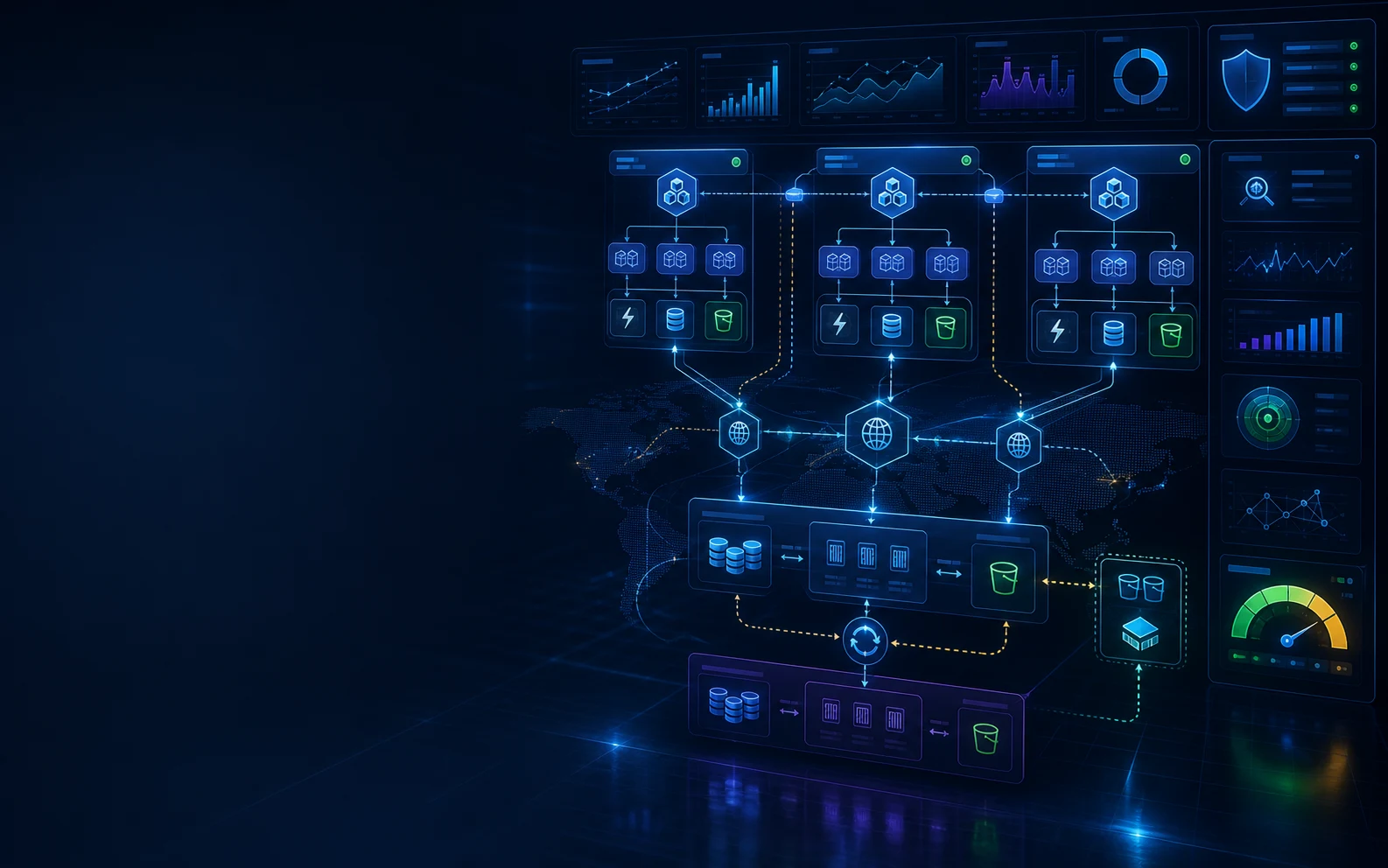
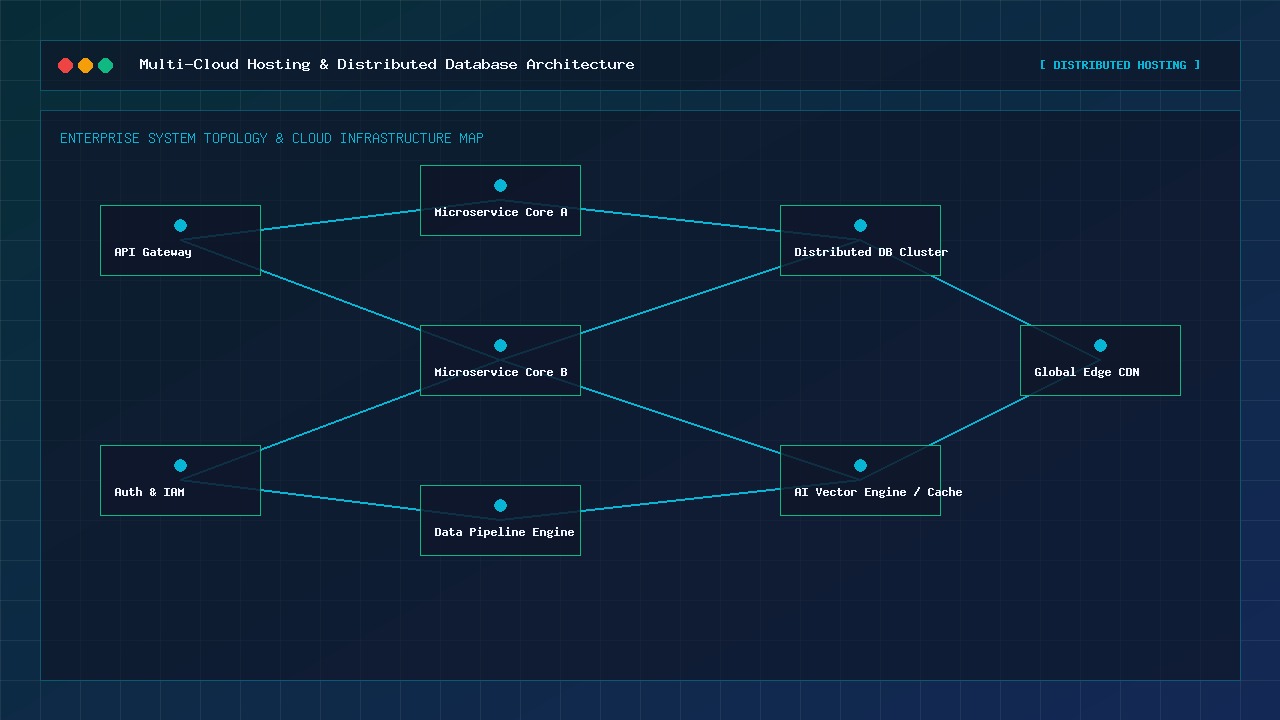 Elastic compute · Data services · Global delivery
Traditional single-server hosting leaves web and mobile applications vulnerable to unexpected downtime, slow load times, and storage limitations. We build distributed cloud hosting architectures with global edge caching and automated load balancing.
By combining high-performance compute nodes (AWS EC2 / Azure VMs) with auto-scaling relational and NoSQL databases (Amazon Aurora, DynamoDB, Redis), your applications remain fast and responsive during massive traffic spikes.
High-concurrency traffic handling with automated elastic scaling.
Distributed S3 object storage with automated CDN asset distribution.
Multi-region database replicas designed around workload latency and recovery requirements.
24/7 proactive infrastructure telemetry monitoring and automated alerts.
Six foundational pillars engineered into every cloud solution environment.
High-availability hosting across AWS, Azure, or GCP engineered for elastic scaling and workload-appropriate redundancy.
Deploying production Kubernetes clusters (AWS EKS, Azure AKS, Google GKE) for scalable microservices management.
Event-driven serverless architectures using AWS Lambda, Azure Functions, or Cloud Run to reduce infrastructure operations and align compute with demand.
Scalable cloud storage (Amazon S3) and high-speed distributed databases (Aurora, DynamoDB, Redis Enterprise).
Automated multi-region backups and active-active failover minimizing Recovery Time (RTO) and Recovery Point (RPO).
IAM policies, managed encryption, threat monitoring, policy controls, and implementation support aligned with your compliance program.
Hardware outages, region failures, and ransomware can halt business operations. We design cloud disaster-recovery solutions with protected backups, tested replication, and recovery automation aligned to agreed RTO and RPO targets.
Recovery Point Objectives designed through appropriate snapshots, replication, and change-data-capture patterns.
Recovery Time Objectives supported by automated routing, documented runbooks, and rehearsed failover procedures.
Immutable snapshot backups preventing data corruption and ransomware loss.
Automated Disaster Recovery (DR) drills verifying failover readiness.
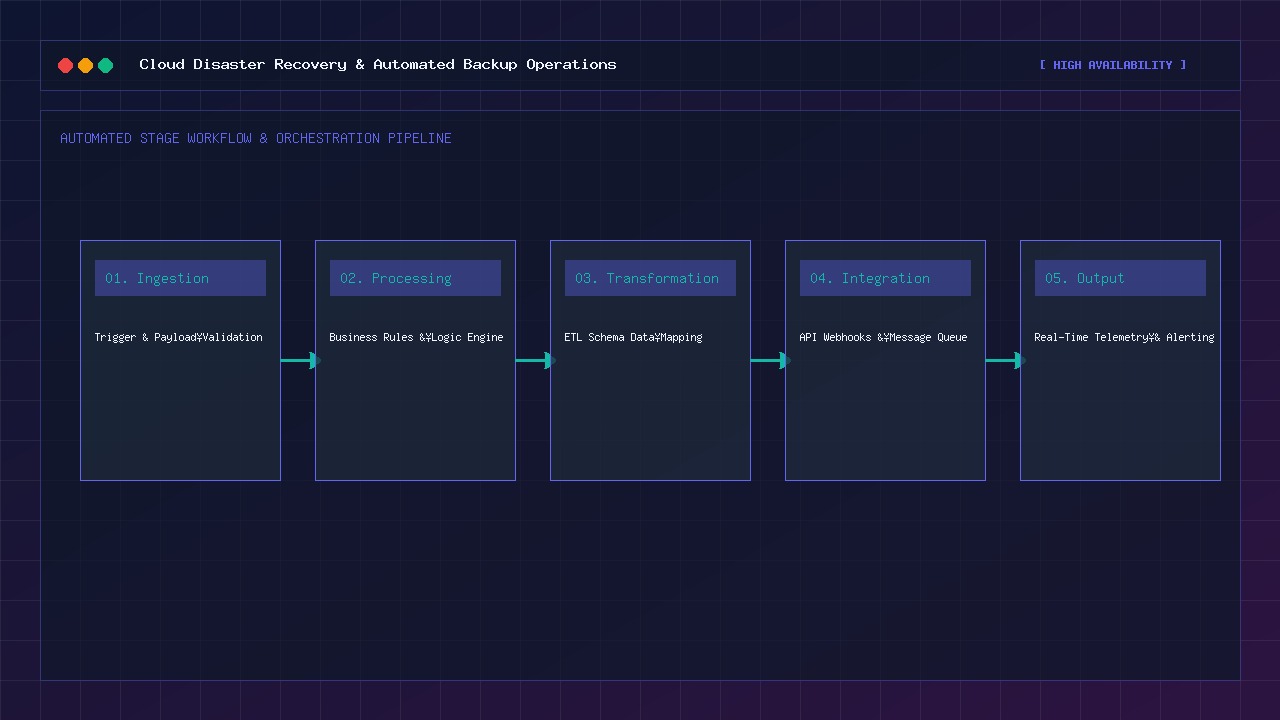 Replication · Recovery objectives · Tested failover
Industry-standard cloud providers, database systems, and security suites.
Infrastructure audit, workload evaluation, and SLA requirements definition.
Multi-cloud architecture blueprint, VPC network design, and security specs.
Terraform IaC script writing, container cluster setup, and staging build.
Database CDC replication, failover testing, and load benchmarking.
Planned traffic routing, live monitoring, validation, and a tested rollback path.
Continuous telemetry monitoring, patch management, and optimization.
A single-cloud architecture concentrates services with one provider and is often simpler to operate. Multi-cloud uses more than one provider where business, regulatory, resilience, or capability requirements justify the added complexity. We recommend the simplest architecture that meets the actual risk and portability goals.
We configure encrypted backups, retention policies, replication, recovery runbooks, and scheduled restore tests. Failover timing depends on the agreed architecture, application dependencies, data consistency model, and validated recovery objectives.
Yes. Depending on the application, we use rehosting, replatforming, containerization, or phased modernization. Change-data capture, parallel environments, rehearsals, and rollback planning can minimize disruption while protecting data integrity.
We implement FinOps auto-scaling policies, spot instance allocation for background queues, and continuous resource rightsizing to prevent unutilized compute overhead and bill spikes.