Zero-Trust IAM & Multi-Factor Auth
Enterprise Single Sign-On (SSO), SAML 2.0, OAuth2, biometrics, and granular role-based permission policies.
We assess, harden, and monitor enterprise software—combining identity controls, application protection, encryption, security telemetry, and evidence-ready engineering around your risk profile.

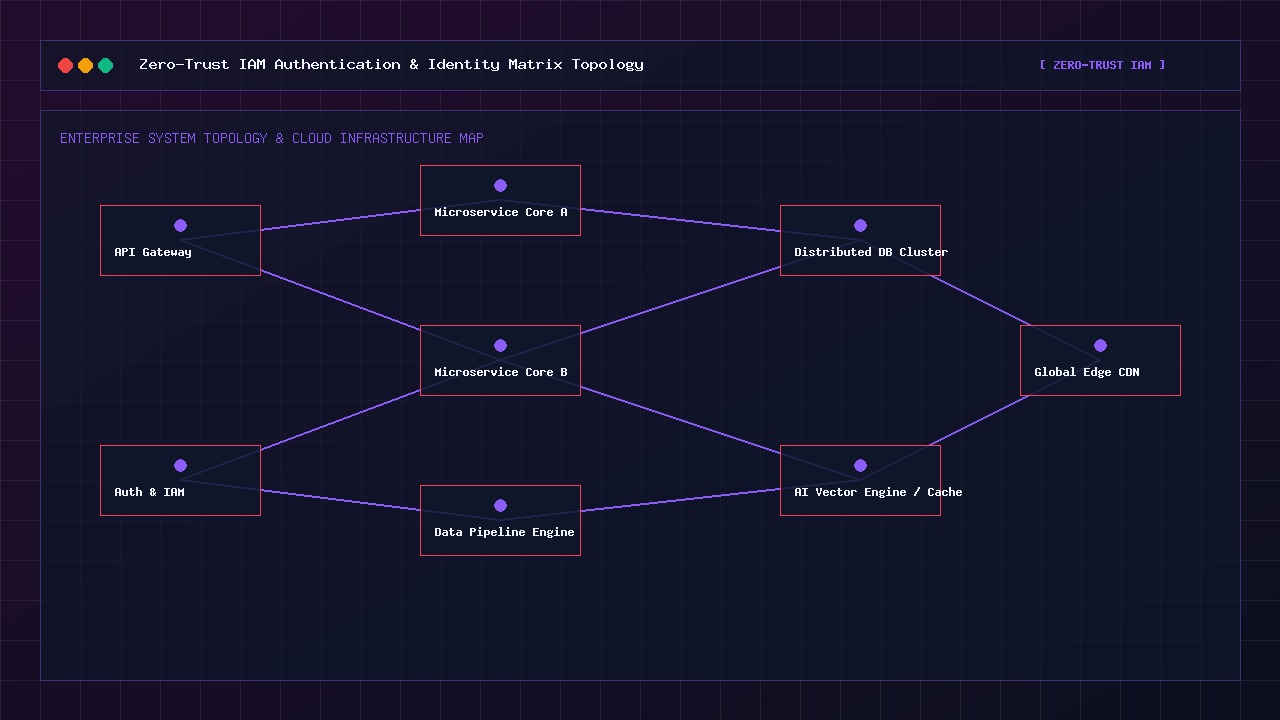 Identity · Device trust · Least privilege · Audit
Traditional perimeter security is no longer enough to protect modern enterprise cloud applications. We build Zero-Trust access architectures where every user, API call, and microservice payload is authenticated and authorized in real-time.
Integrating with Okta, Azure AD, SAML 2.0, and OAuth 2.0, we enforce granular role-based access and managed secrets to reduce credential exposure and privilege risk.
SAML 2.0 & OAuth 2.0 SSO with mandatory multi-factor authentication (MFA).
Policy evaluation designed and benchmarked for multi-tenant enterprise backends.
Managed secret rotation that removes hardcoded credentials from application code.
Immutable audit logging tracking every user and system access event.
Six core cybersecurity pillars engineered into every enterprise software platform.
Enterprise Single Sign-On (SSO), SAML 2.0, OAuth2, biometrics, and granular role-based permission policies.
Static (SAST) and dynamic (DAST) application security testing to identify and remediate OWASP Top 10 exploits.
Cloudflare WAF, AWS Shield, rate-limiting, and bot mitigation insulating endpoints from malicious traffic.
AES-256 database encryption at rest, TLS 1.3 in-transit security, and automated KMS key rotation.
Preparing codebases, server logs, and security infrastructure for SOC2 Type II, ISO 27001, HIPAA, and GDPR audits.
Real-time security log aggregation, automated threat detection alerts, and anomaly response queues.
Unpatched dependencies and un-scanned endpoints leave web applications vulnerable to SQL injection, XSS, and remote code execution. We execute rigorous penetration testing and deploy Web Application Firewalls (WAF).
Comprehensive OWASP Top 10 vulnerability scanning and patch sprints.
Cloudflare & AWS WAF rules blocking automated bot exploits and SQLi.
Automated dependency vulnerability monitoring (Snyk / Dependabot).
Risk-based emergency response plans for actively exploited and high-impact vulnerabilities.
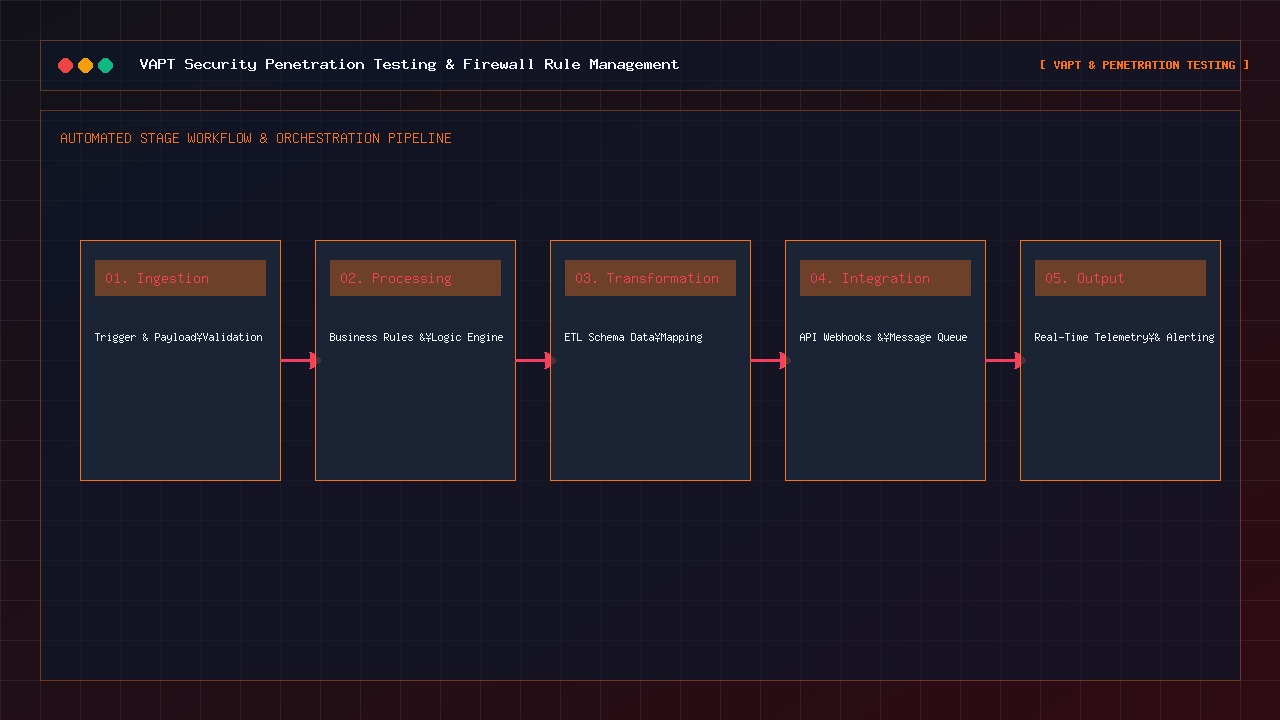 Findings · Exploit validation · WAF policy · Remediation
Industry-leading identity providers, firewalls, and encryption management engines.
Vulnerability assessment, penetration testing, and code risk profiling.
Threat modeling, Zero-Trust network design, and RBAC policy mapping.
Deploying WAF rules, KMS encryption, and HashiCorp Vault secrets management.
Control mapping, evidence collection, gap remediation, and audit-readiness support.
Controlled security rollout, validation, rollback planning, and SIEM integration.
Continuous telemetry monitoring, threat alerts, and zero-day patching.
Zero Trust avoids granting access solely because a request originates inside a network boundary. It continuously evaluates identity, device, context, resource sensitivity, and policy before granting the minimum necessary access.
We map applicable technical controls, identify gaps, implement improvements, and organize engineering evidence such as access reviews, encryption configuration, logging, vulnerability management, and change records. Certification remains the independent auditor's decision.
Managed edge controls can filter known attack patterns, apply rate limits, challenge suspicious automation, and absorb supported traffic floods. Effective protection still requires tuned rules, origin hardening, monitoring, and an incident-response plan.
We recommend automated continuous dependency scanning on every git commit, paired with formal third-party penetration testing at least once a year or prior to major software release updates.